
Average Order Value (AOV)

Last updated: Jan 26, 2026

What is Average Order Value

Average Order Value (AOV) measures the average amount of revenue generated per order over a defined period of time. It is calculated by dividing total revenue by the total number of orders placed during that period. AOV can be tracked over any time frame—daily, weekly, monthly, or over the lifetime of an e-commerce business—and is a key indicator of purchasing behaviour.

Average Order Value Formula

How to calculate Average Order Value

From November 1 to November 30, Company ABC generated $45,000 in revenue from 450 orders. For this customer, the average order value in November is $100 per order.

Start tracking your Average Order Value data

Use PowerMetrics, modern analytics platform, to monitor your data. Choose a service below to start tracking your Average Order Value instantly.

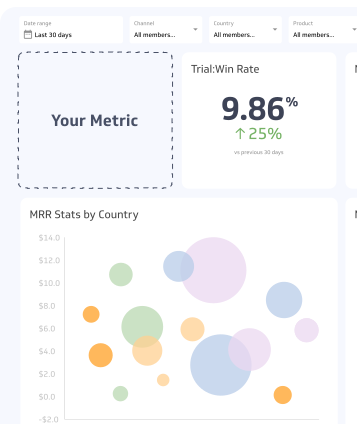
PowerMetrics Dashboard

What is a good Average Order Value benchmark?

There is no universal benchmark for Average Order Value, as it varies widely by industry, product category, price point, and business model. High-volume, low-cost retailers typically have lower AOVs, while specialty or luxury e-commerce businesses tend to have higher AOVs. Rather than relying on external benchmarks, most teams focus on tracking AOV trends over time and comparing performance across campaigns, channels, customer segments, and seasons.

How to visualize Average Order Value?

The best way to visualize Average Order Value in a dashboard is with a line chart that shows changes in trends over time, while making it easy to differentiate between mere seasonality and actual impactful changes.

Average Order Value visualization example

Average Order Value

Line Chart

Here's an example of how to visualize your Average Order Value data in a line chart over time.
arrow-right icon
arrow-right icon

Average Order Value

Chart

Measuring Average Order Value

More about Average Order Value

Average Order Value helps businesses understand how much revenue they can expect each time a customer places an order. It is commonly used as a performance benchmark and to evaluate the effectiveness of pricing, bundling, cross-sell, and upsell strategies.

Tracking AOV over time provides insight into how shoppers interact with your product catalogue and promotions. Increases in AOV may indicate that customers are buying more items per order, purchasing higher-priced items, or responding positively to merchandising strategies such as bundles or free-shipping thresholds. Conversely, decreases in AOV may signal heavier discounting, shifts toward lower-priced products, or changes in customer mix.

AOV is most informative when analysed alongside Average Basket Size (ABS) and Average Selling Price (ASP). Together, these metrics explain whether changes in revenue are driven by customers buying more items, paying more per item, or both. While steady growth in AOV can be a positive indicator of customer trust and engagement, it is important to interpret trends in context. Seasonal promotions, clearance events, and holiday shopping periods can all temporarily inflate AOV without reflecting long-term behavioural change.


Average Order Value Frequently Asked Questions

How is Average Order Value different from Average Basket Size?

arrow-right icon

Average Order Value measures revenue per order, while Average Basket Size measures the number of items per order. AOV is influenced by both the quantity of items purchased and the price of those items.

What strategies can increase Average Order Value?

arrow-right icon

Common tactics include product bundling, volume discounts, cross-sell and upsell recommendations, free-shipping thresholds, and personalised promotions.

Can a higher Average Order Value be misleading?

arrow-right icon

Yes. AOV can increase due to heavy discounting or reduced order frequency, which may negatively impact margins or long-term customer value. AOV should always be reviewed alongside transaction count, gross margin, and conversion rate.