Post Comments is the count of written responses people leave on your social media posts. It measures how many people cared enough to reply, and it shows what they think in their own words. A comment takes more effort than a like, so it is a stronger signal of interest, agreement, confusion, or frustration. Teams use it to learn which topics and formats start conversation, which posts need a faster reply, and whether a campaign is landing as intended.
A small coffee roaster posts three times on Instagram in one day. The posts receive 12, 5, and 7 comments.
Formula: Post Comments = Count(comments)
- Add the comments: 12 + 5 + 7 = 24.
- To compare fairly, divide by followers. With 2,000 followers, the comment rate is 24 / 2,000 = 1.2%.
What it means: The roaster got 24 comments in a day, about one for every 83 followers. The post that asked "What's your go-to brew method?" drew 12 of them, which suggests open questions start more conversation than announcements.
Where a benchmark is needed, compare comment rate (comments divided by followers or impressions) against your own history and against a current, sourced industry report for your platform and segment.
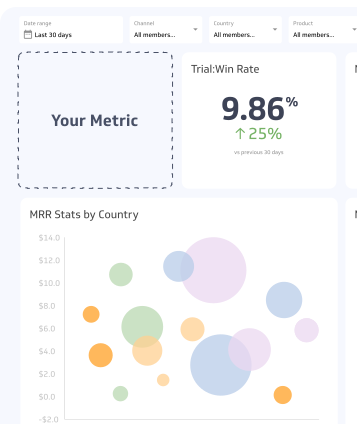
Use a summary chart to measure your Post Comments data. This will let you compare your current data to a previous time period, letting you make adjustments to your strategy to engage your audience better.
Business context
Why the metric matters
Comments give you three things that other engagement metrics don't:
- Opinion: People say what they think of your brand, product, or content in their own words.
- Questions: Comments often reveal what buyers don't understand or can't find.
- Risk signals: A cluster of complaints is an early warning about a product, a service issue, or a campaign that landed badly.
The goal is not just more comments. It is more positive, relevant conversation. A post with 200 angry replies has high engagement and a problem.
Comments also feed platform ranking systems. Facebook, LinkedIn, Instagram, and X sort feeds by predicted relevance, and conversation around a post is one of the signals. Real back-and-forth can widen a post's reach.
Decisions it informs
- Which topics and formats start conversation with your audience
- Which posts need a faster response from your team
- Which customer questions belong in an FAQ, product update, or support article
- Whether a campaign is landing the way you intended
How to read the number
A raw count is only meaningful in context. Compare it with your own history before comparing it with anyone else.
| Pattern | Likely meaning | What to check |
|---|
| Comments rise with reach | Healthy growth in attention | Whether the share of relevant replies is holding steady |
| Comments rise, reach flat | The post struck a nerve, or a giveaway is driving replies | Sentiment and whether comments are on topic |
| Comments flat, reach rises | Viewers see the post but don't feel moved to respond | Whether the post asks for a response |
| Sudden spike | Controversy, a viral share, or bot activity | The content of the comments, not just the count |
| Steady decline | Audience fatigue or lower organic distribution | Posting frequency, format mix, and platform changes |
Larger accounts naturally get more comments. To compare posts or accounts fairly, divide comments by a size measure, such as followers or impressions. Many teams call this a comment rate.
Common variations
Teams count comments differently, so state your definition before you compare numbers.
- Total comments: All replies, including replies to other comments. Some platforms count these and others show only top-level comments.
- Top-level comments: Direct responses to the post only. This is a cleaner measure of how many people chose to join the conversation.
- Comments from others: Excludes replies from your own team. Use this version to measure audience behaviour rather than your own activity.
- Comment rate: Comments divided by followers or impressions, shown as a percentage. The denominator changes the result, so use the same one every time.
Check how each platform's analytics defines a comment. Platforms don't always match, and they change their reporting over time.
Best practices for increasing and tracking comments
Ask for a response
Posts that end with an open-ended question tend to draw more replies than posts that only announce something. "What's the one report you open first on Monday?" invites an answer. "Do you like our new feature?" invites a one-word reply or silence.
Reply quickly and consistently
Replying shows people their comment was read, and it often prompts more discussion. Set a response window your team can keep, such as one business day, and assign who owns it.
Handle negative comments with care
Respond to complaints with professionalism and empathy. Acknowledge the problem, offer a path to resolution, and move detailed conversations to a private channel when personal information is involved. Hiding or deleting legitimate criticism usually makes things worse, so reserve removal for spam, abuse, and rule violations.
Track by post type
Tag posts by format (video, image, text, link), topic, and platform. Then compare comments within each group. This tells you what to repeat far better than a monthly total does.
Pair the count with sentiment
Read a sample of comments each week, or classify them as positive, neutral, or negative. A simple split is enough to start. Track the share of each over time alongside the count.
Common challenges
Counting comments that aren't real engagement
Spam, bot replies, and giveaway entries ("done!") inflate the count without showing interest. If you run contests that require a comment, report those posts separately so they don't distort your averages.
Chasing volume over quality
Pushing for more comments can lead to bait posts that attract low-value replies. Judge success by relevant, constructive conversation, not the total alone.
Ignoring platform differences
Audiences behave differently on each platform. A comment on LinkedIn often carries professional opinion, while one on Instagram may be a short reaction. Compare each platform to its own history.
Missing conversations that happen elsewhere
People may share your post and discuss it in their own feeds, in private groups, or in direct messages. Comments on your post capture only part of the discussion.
Related metrics
Post Comments work best next to other engagement measures:
- Post Likes show low-effort approval.
- Post Shares show willingness to put your content in front of someone else's audience.
- Impressions and reach give the denominator for a comment rate.
A post with many shares but few comments may be useful but not conversation-worthy. A post with many comments but few shares may be provoking debate people don't want to be associated with. Reading the three together gives a fuller picture than any one alone.