
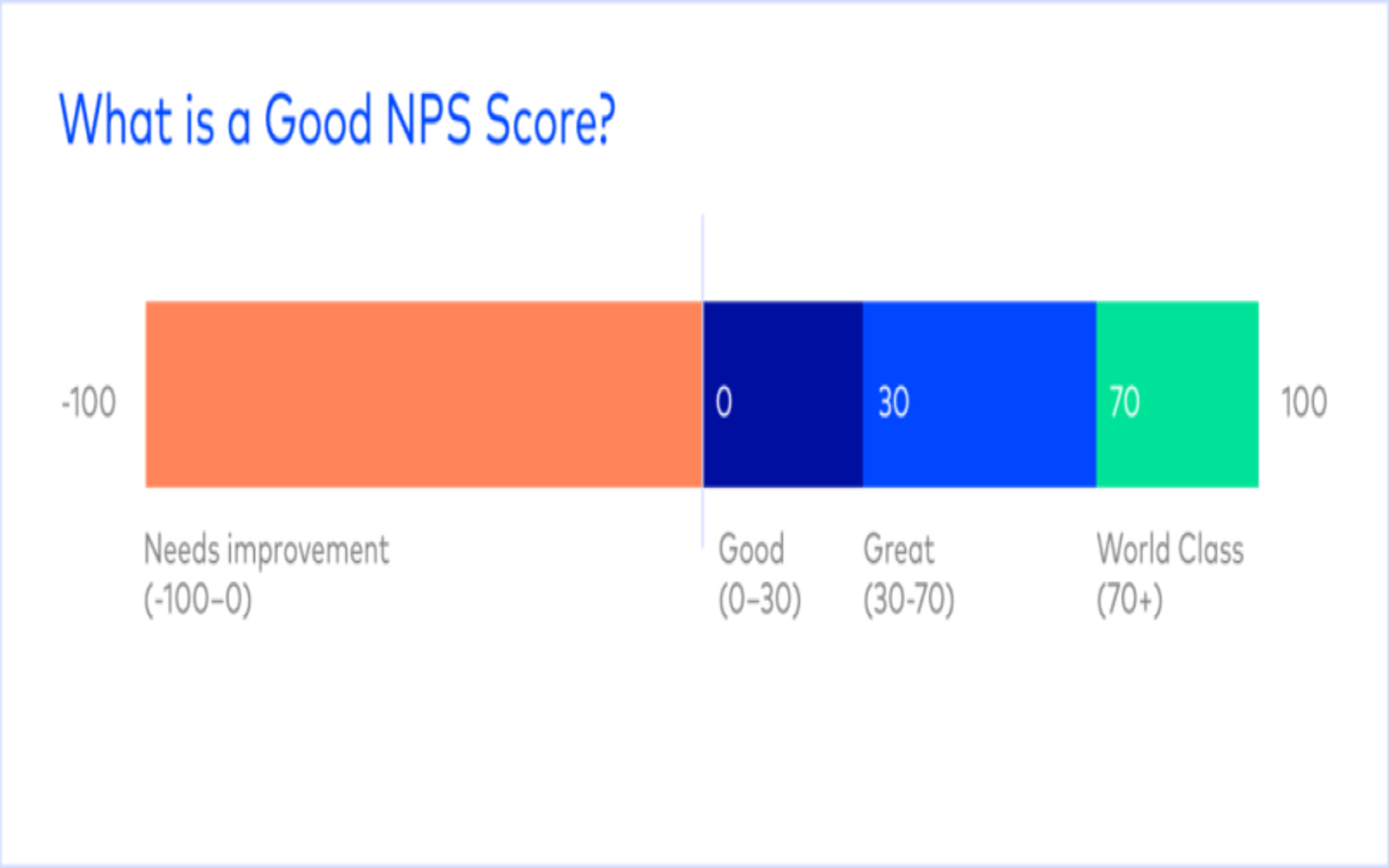


NPS has grown to be an incredibly popular metric among marketing and customer support departments, valued for its simplicity and for its focus on customer satisfaction and loyalty as the prime measures of organizational performance. NPS can be an especially important metric to organizations focused on growth through account expansion or referrals - the “Viral Engine of Growth” in Eric Ries’ terms.
Net promoter scoring should start by answering two related questions:
- why are we asking? and
- what will we do with this information?
Most organizations will use an initial NPS survey as a benchmark, and track subsequent NPS surveys to measure ebbs and flows in customer sentiment over time. Having clear visibility into changes in NPS over time enables action when customer satisfaction/loyalty drops significantly. A climbing NPS score is an indication that customer experiences are improving, so you should keep doing what you’re doing.
Shelley Kuipers, Co-founder and Co-CEO of financial investment platform The51, cautions that the landscape has changed - social media is becoming more locked down and brands that were paying for every customer are greatly impacted. While Search Engine Optimization (SEO) and optimizing ad spending across different channels are still important, Shelley advises founders to build user loyalty versus relying only on paid marketing. Building a strong brand, adopting brand-led and community-led growth practices are strategies companies can use to foster affinity and loyalty.
Perhaps the best insights and the most powerful benefits of net promoter scoring come when you combine NPS with related KPIs such as Customer Retention Rate and Customer Referral Rate. If NPS has been falling for the past two quarters, you should expect to see a climb in customer churn and a reduction in account expansions and referrals. On the other hand, as NPS climbs, you would expect to see rising customer referral, retention and expansion rates. Measuring the relationships between these metrics can help optimize performance over time.