Website Bounce Rate measures the percentage of website sessions that are single-page sessions. A single-page session is when a user exits a website after interacting with a single page only. Interactions, also called Engagement Hits or interaction events by Google Analytics, can include: page views, social shares, e-commerce transactions, CTA interactions, and more.
Say your website gets 10,000 sessions per week. Out of these, 4,000 sessions are single-page sessions where visitors land on your blog or other pages of your website, read the content, and exit without interacting further. Assuming every session outside of these 4,000 sessions have more than one interaction event take place, your bounce rate would be 4,000 / 10,000 which equals a bounce rate of 40%.
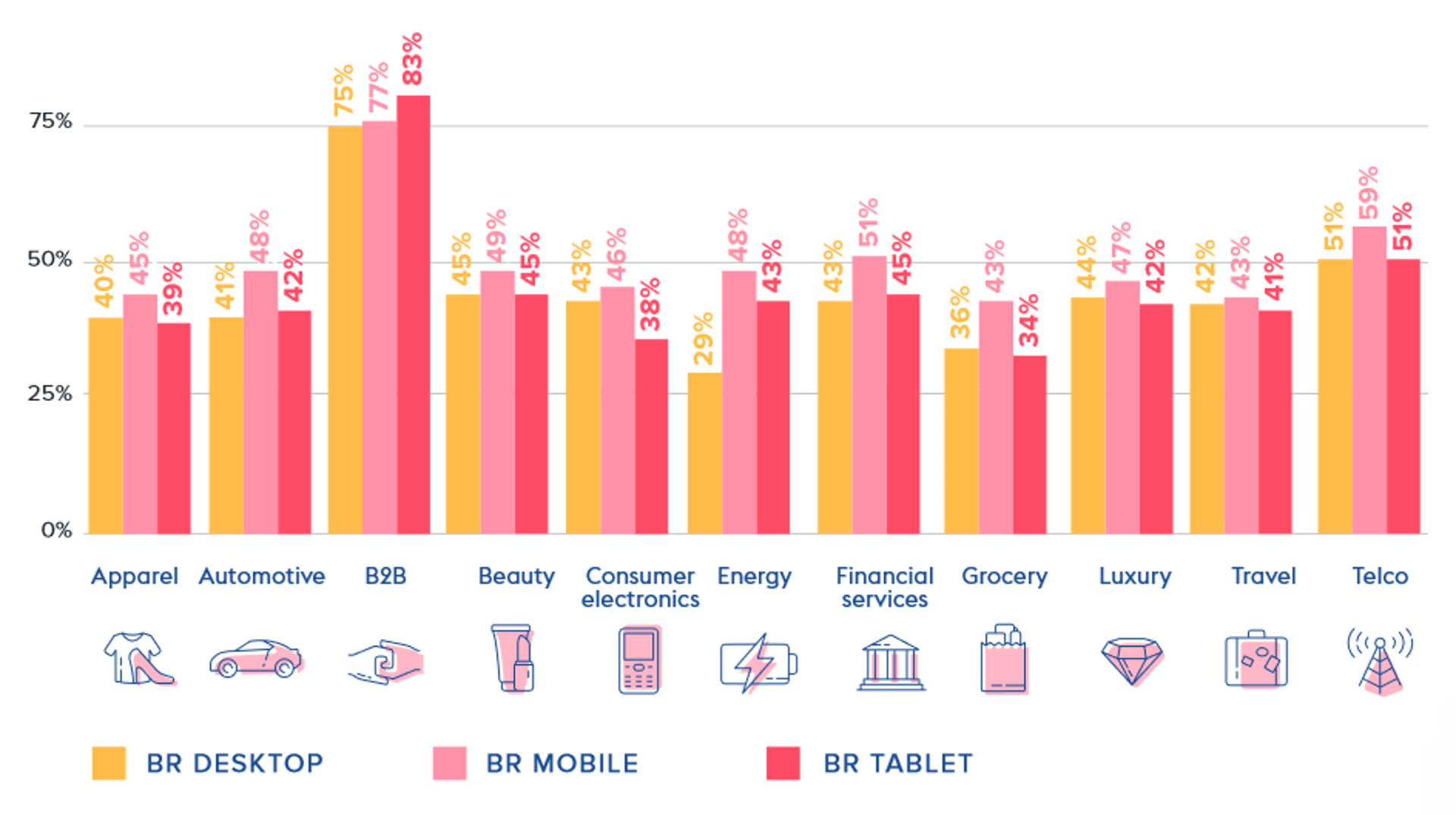
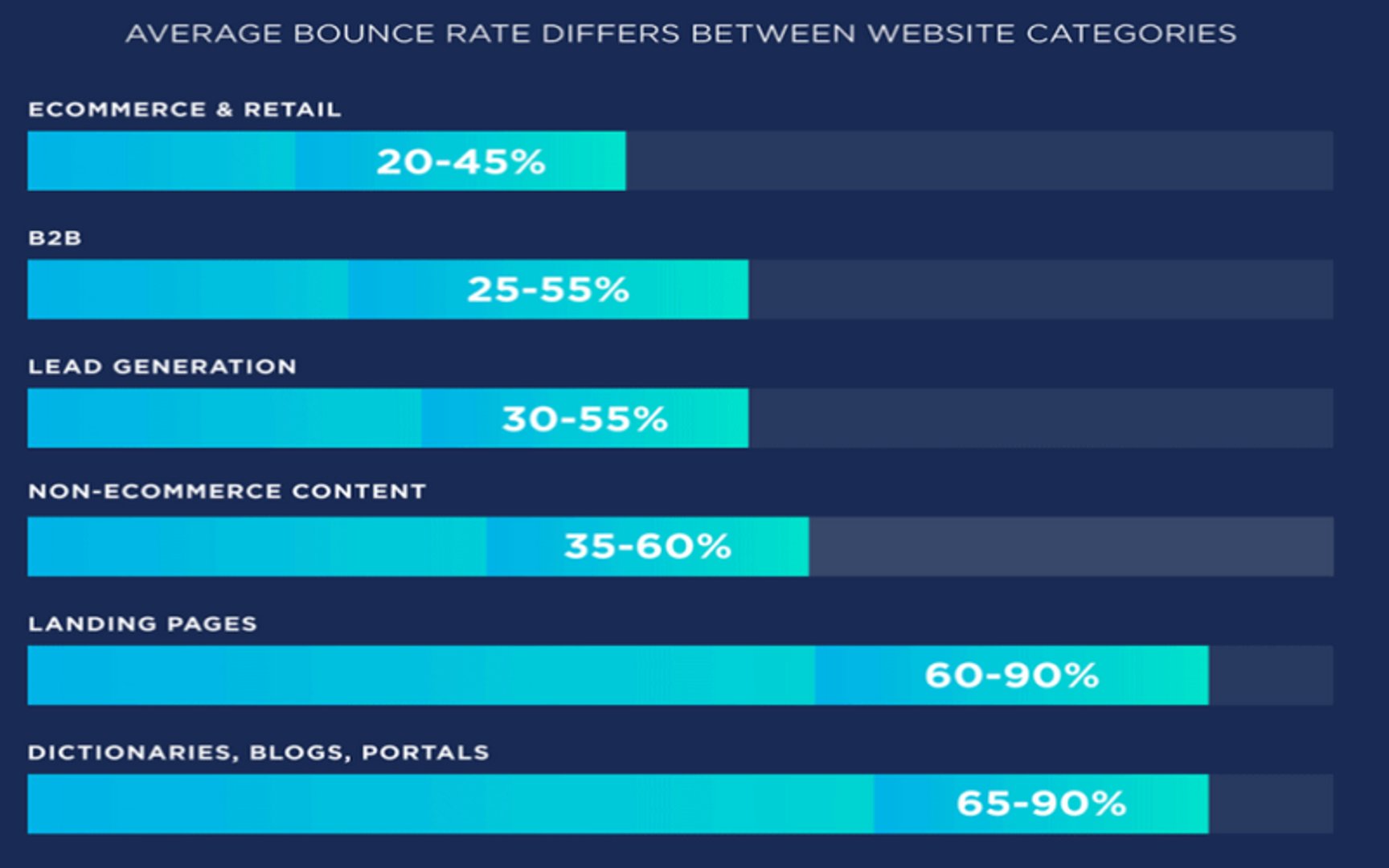
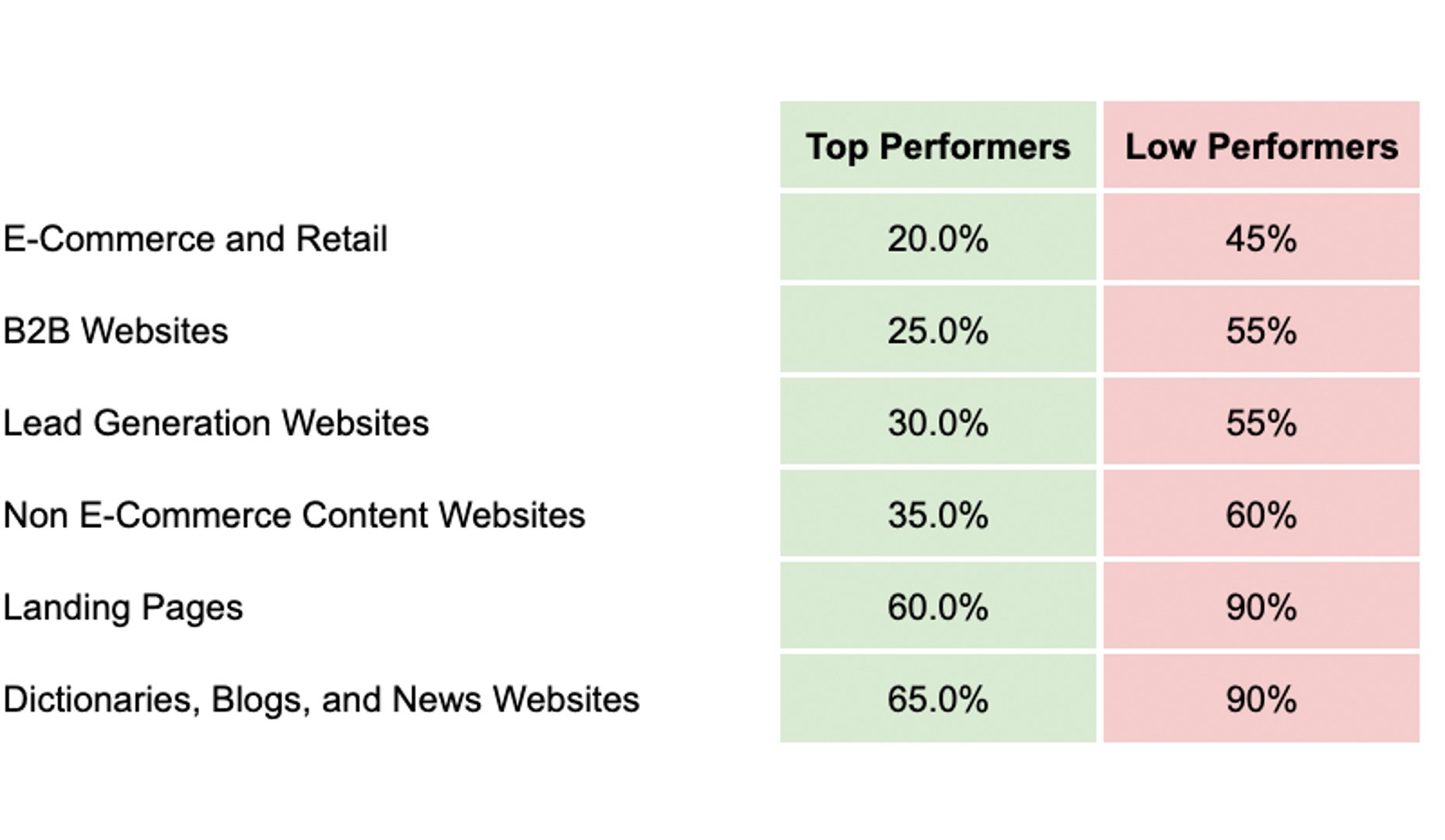
On average, Bounce Rate is 47% across all industries and highest for B2B at around 75% - 83%. Website Bounce Rate also varies based on website categories, and can be as high as 90% for dictionaries, blogs, or journalistic content.
To visualize your website bounce rate data, it is best to use either a line chart to view fluctuations over time, or a summary chart to view the current value and compare it with a previous time period. For bounce rate, weekly comparisons are helpful if you've recently made website optimization changes that you expect will improve the user experience.
Bounce Rate measures the percentage of users that exited the session after viewing a single page only, known as a single-page session. Any action that takes the user away from the website qualifies as a bounce, including closing browser tabs or windows, clicking an outbound link, session timeouts, and clicking the browser back button.
Although the objective of many websites is to engage the user across multiple pages, there are some scenarios where it is appropriate for users to engage with a single web page, for example, a campaign specific landing page. It is therefore important to measure bounce rate alongside other metrics such as the average time spent on a page and the goal conversion rate.
Website Bounce Rate can be measured by device as well. A website is likely to have a higher bounce rate when viewed from a mobile device as opposed to a desktop. Since there are so many factors at play, it is crucial to analyze the whole context of the website and its function before deciding if the bounce rate is too high or low.