
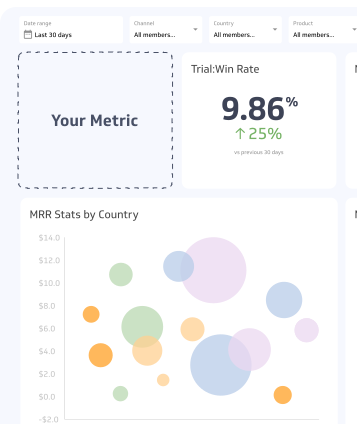
User Engagement serves as a foundational metric for calculating derived insights and understanding overall content performance at scale. As an aggregate measure, it's particularly powerful when combined with user counts to create efficiency ratios, or when tracked over time to identify trends in total audience attention. Unlike Average Engagement Time, this metric grows with both user volume and engagement depth, making it ideal for measuring the total value your content delivers to your audience.
This metric excels in strategic planning and resource allocation decisions. Marketing teams can use User Engagement to quantify the total attention generated by different campaigns, content types, or traffic sources. Product teams benefit from tracking this metric across features or sections to understand where users invest the most collective time. For content creators, User Engagement helps identify which pieces generate the most total audience value, informing future content investment decisions.
When analysing User Engagement trends, consider both seasonal patterns and growth trajectories. A declining trend might indicate audience fatigue, competitive pressure, or content relevance issues, while growth could signal successful content strategy, improved user experience, or expanding market reach. Segment this metric by key dimensions like traffic source, content category, or user type to identify which areas drive the most total engagement and deserve continued investment.
The metric becomes particularly valuable when calculating engagement efficiency ratios. Dividing User Engagement by total users reveals average engagement per user, while comparing User Engagement across different time periods helps quantify the impact of site changes, content updates, or marketing initiatives. Consider pairing this metric with conversion data to understand not just attention capture but also the business impact of that engagement.
For optimisation, focus on both attracting more engaged users and deepening existing user engagement. Content that generates high individual engagement times will naturally contribute more to total User Engagement, making content depth and quality crucial factors. Similarly, user experience improvements that reduce friction and encourage exploration can significantly impact this metric by keeping users engaged longer during each visit.
