You manage a Facebook Page for a retail brand and publish five posts in one week. Across all five posts, 1,000 unique users see at least one post in their feed. Your Page Reach for that week is 1,000. If 200 of those users each saw three posts, your impressions would be higher, but Page Reach stays at 1,000 because each user is counted only once.
Page Reach
Last updated: Jun 18, 2026
What is Page Reach?
Page Reach is the number of unique users who have seen posts or any other content from your social media page at least once. Unlike impressions, it counts each user only once, making it a measure of true audience exposure rather than total views.
Page Reach Formula
ƒ Count(unique users who saw page content)
How to calculate Page Reach
Start tracking your Page Reach data
Use PowerMetrics, modern analytics platform, to monitor your data. Choose a service below to start tracking your Page Reach instantly.

How to visualize Page Reach?
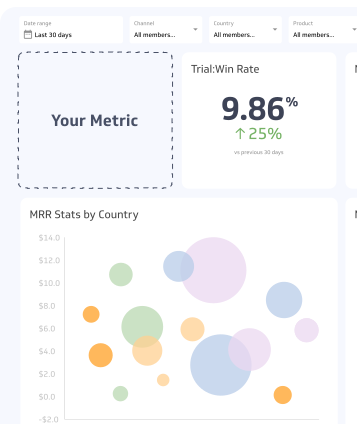
Use a summary chart to best visualize your Page Reach data. This type of chart compares the current value to a previous time period.
Page Reach visualization example

Summary Chart
Here's an example of how to visualize your current Page Reach data in comparison to a previous time period or date range.

Page Reach
Chart
Measuring Page ReachMore about Page Reach
How Page Reach is calculated
Page Reach is a count, not a ratio, so the formula is straightforward:
Page Reach = Count of unique users who saw your page content
Most social media platforms, including Facebook (Meta), Instagram, and LinkedIn, calculate and report this figure automatically in their native analytics dashboards. You don't need to derive it manually.
Why Page Reach matters
Page Reach tells you whether your content is getting in front of new eyes. A high reach means your posts are being surfaced by the platform's algorithm, shared by followers, or discovered through search and recommendations.
Low reach signals that your content is staying within a narrow audience — likely your existing followers — and isn't expanding your brand's visibility.
Reach is especially useful for:
Brand awareness campaigns — measuring how many people are being exposed to your messaging
Content performance comparisons — identifying which post types or topics spread furthest
Audience growth tracking — monitoring whether your overall page visibility is trending up or down over time
Page Reach vs. Impressions
These two metrics are often confused. Here's how they differ:
| Metric | What it counts | Use case |
|---|---|---|
| Page Reach | Unique users who saw your content | Audience size and brand exposure |
| Impressions | Total views, including repeat views | Content frequency and saturation |
Both metrics matter. Reach tells you how many people you're reaching; impressions tell you how often they're seeing your content. A high impressions-to-reach ratio means your content is appearing to the same users repeatedly, which can indicate either strong algorithm performance or overexposure.
How to improve Page Reach
Platform algorithms tend to reward content that generates early engagement. A few practices that support stronger reach:
Engage early. Respond to comments and reactions within the first 30 minutes of publishing. Early engagement signals to the algorithm that the post is worth distributing more widely.
Include a clear call-to-action. Posts that prompt a specific response — a comment, a share, a reaction — tend to generate more interaction, which feeds algorithmic reach.
Post at high-traffic times. Publishing when your audience is most active increases the likelihood of early engagement. Most platform analytics tools surface this data in their audience insights section.
Vary content formats. Video, carousels, and image posts often outperform plain text in reach, though this varies by platform and audience.
Encourage sharing. Organic shares are one of the most effective drivers of reach because they expose your content to users outside your existing follower base.
Limitations of Page Reach as a metric
Page Reach measures exposure, not engagement or conversion. A large reach doesn't mean users read your content, clicked through, or took any action. Use reach alongside engagement rate, click-through rate, and follower growth to get a complete picture of social media performance.
It's also worth noting that platform definitions of reach can differ slightly. Meta, LinkedIn, and other platforms each have their own methodology for counting unique users, and organic reach figures are typically lower than paid reach. When comparing reach across platforms, make sure you're comparing like-for-like figures.
Recommended resources related to Page Reach
The difference between Page Reach, Views, and Impressions on FacebookContributor