CPL is not a one-size-fits-all metric as it can vary widely depending on the industry, target market, and marketing channel. For example, industries with longer sales cycles such as B2B may have higher CPLs than B2C businesses with shorter sales cycles. Similarly, certain marketing channels such as social media or email marketing may have lower CPLs than display advertising or search engine marketing (SEM).
Measuring CPL allows businesses to identify the most effective marketing channels to generate leads and optimize their marketing budget accordingly. For instance, if a business is spending more on paid advertising than social media marketing but is generating more leads from social media, it may decide to shift its budget towards the latter.
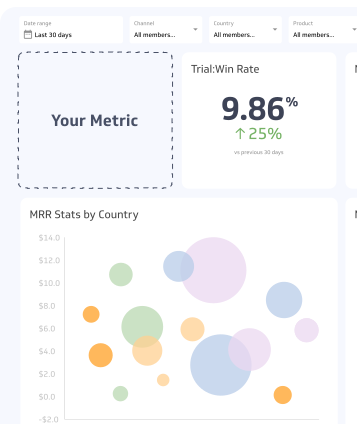
CPL is also useful in identifying areas where businesses can improve their lead-generation strategies. Businesses can identify patterns and adjust their marketing tactics to reduce CPL by analyzing trends over time. For instance, if CPL is consistently high on a particular marketing channel, a business may need to refine its targeting or messaging to be more effective. Ideally, this analysis can be done by country, target market, or product (this of course means that costs and leads need to be captured based on those segments as well).