
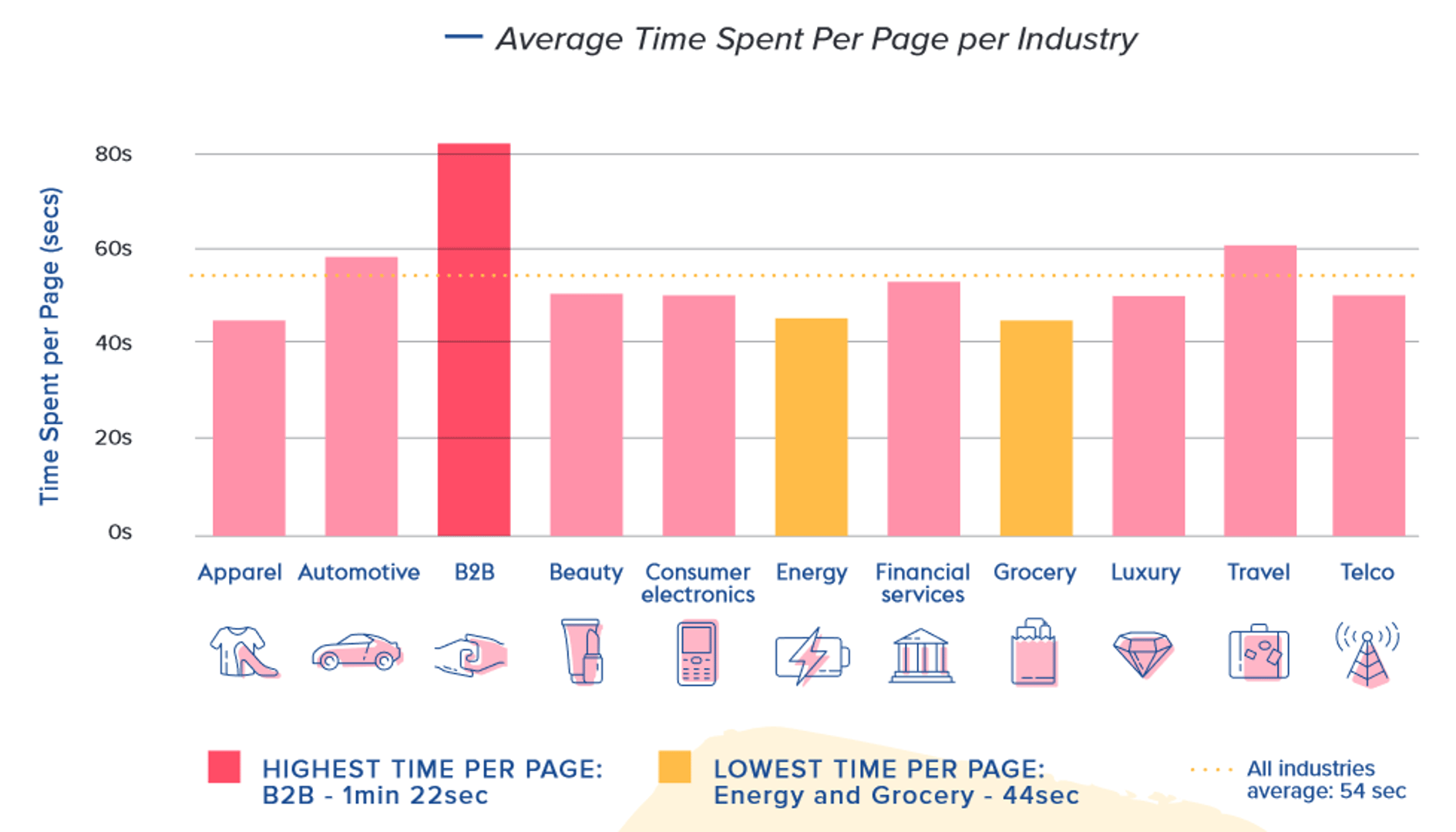

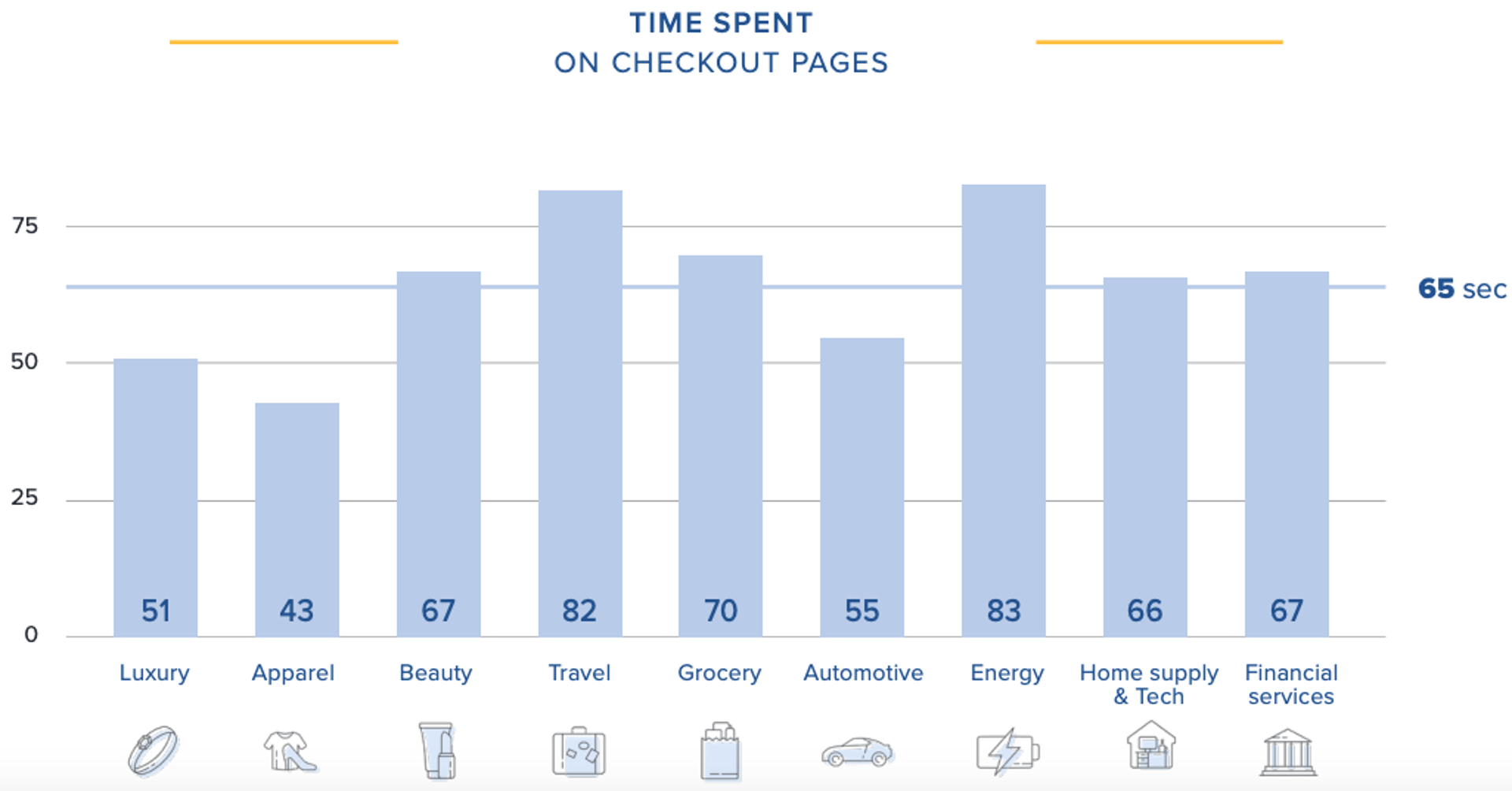


Average Time on Page tracks the average time spent on a particular page by users. Google Analytics is the most commonly used service to track this metric, but it can be tracked by other services as well. Although it seems simple to understand, there are a few concepts to consider before measuring this metric.
How Average Time on Page is measured in Google Analytics
The way Average Time on Page is measured in Google Analytics excludes a type of page view called exit pages. A page exit is when a user exits a page, therefore ending the session on the site, and such pages are called exit pages. Additionally, bounces are excluded from the calculation. Due to this formula, the Average Time on Page as tracked by Google Analytics has the potential to be higher than the reality, especially on pages that are explicitly designed to be exit pages – such as an order confirmation page. It is important to keep this in mind when analyzing Average Time on Page as it is preferable to track this metric only for pages with a low exit rate.
This metric, when used correctly, can give insight into how engaging content is to the audience. A low Average Time on Page where it should be longer can indicate that the user does not find the content interesting or engaging enough to spend time on it. At the same time, high values should be viewed remembering that time spent on the page is recorded even when the page is open as a tab in the background.
As with other website performance metrics, context is key, and it is a good practice to measure each metric alongside other metrics to give a true picture of engagement.