
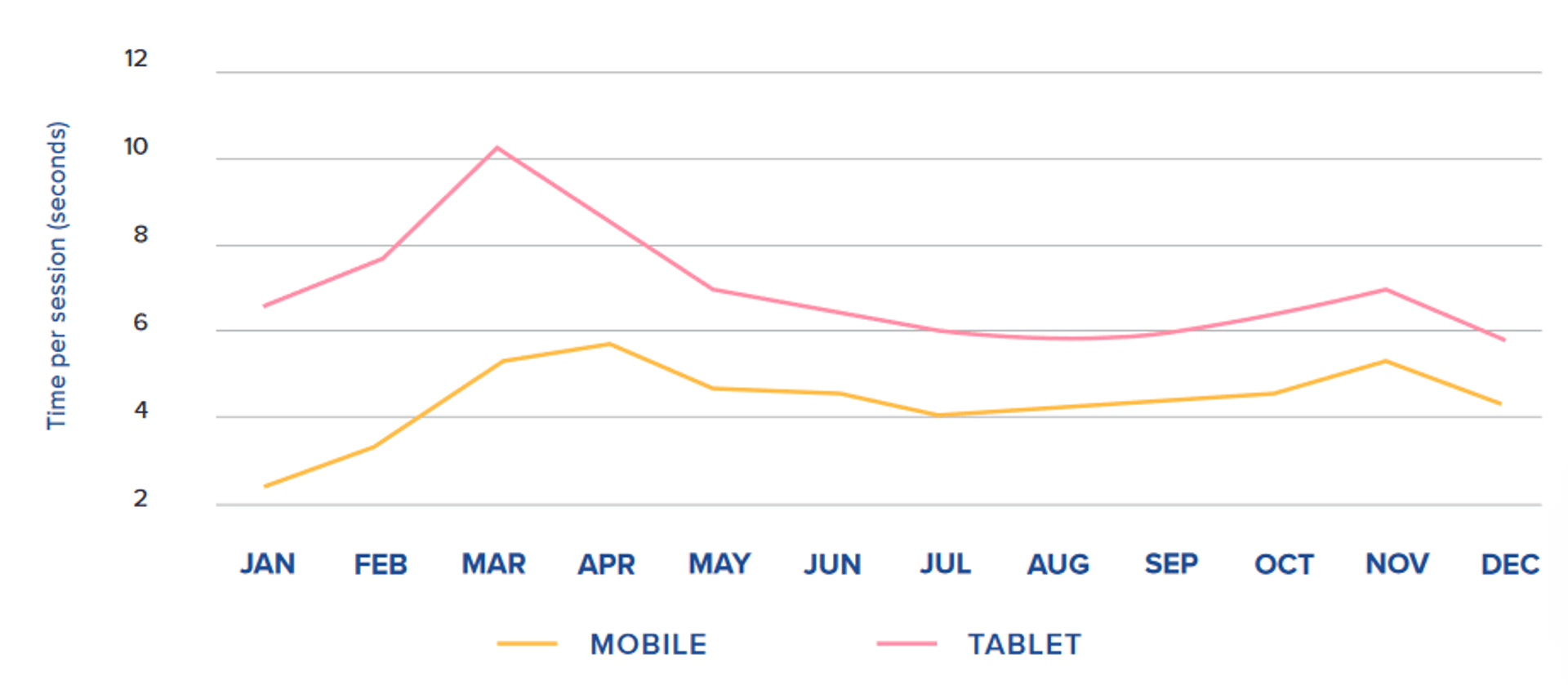


A session is defined as a period of user activity on your website that begins when a user lands on the site and ends after a period of inactivity or when the user exits. Longer sessions often indicate higher engagement, increased likelihood of conversions, and stronger potential for building relationships with users.
Tracking Average Session Duration gives insight into how effectively your content or website layout captures attention. Lower values may indicate that users are not finding content engaging, experiencing navigation issues, or leaving without completing desired actions. While older benchmarks suggested an average session of 2–4 minutes, engagement can vary widely by industry, device type, and content format. Pages or sections that exceed these averages often provide exceptional value, such as high-quality information, interactive content, or multimedia that keeps users engaged.
It’s important to note that individual session duration is calculated differently from the overall Average Session Duration. Modern analytics platforms (like Google Analytics 4) rely on engagement events rather than simple page hits. For example, a session may only count as “engaged” if a user triggers an interaction, such as playing a video, scrolling a page, or clicking a link. Sessions without engagement events may be calculated differently, often defaulting to a minimal time based on non-interaction hits.